Quick answer:
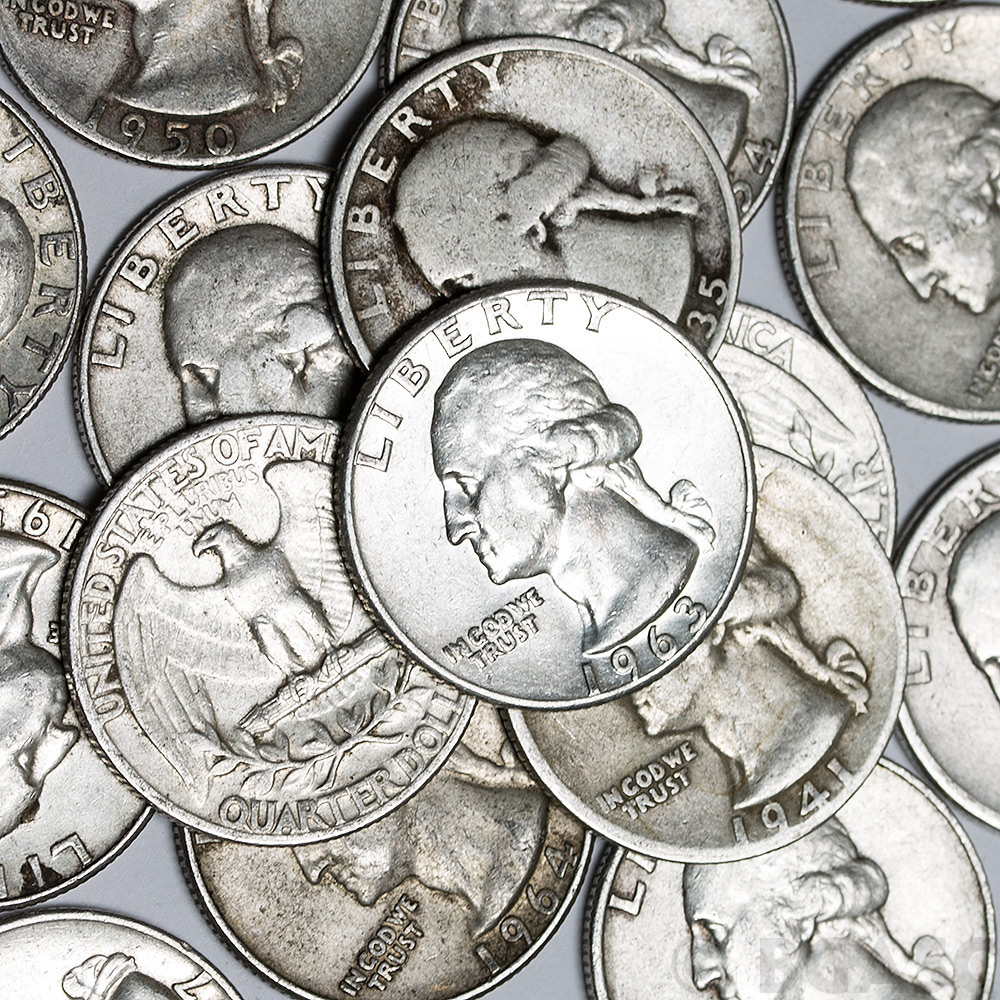
Washington quarters minted in 1964 or earlier are 90% silver. That covers every year from the coin’s introduction in 1932 through the end of silver coinage in 1964. If your Washington quarter has a date of 1965 or later, it contains no silver. Today, each 90% silver Washington quarter is worth $10.51 in silver melt value alone.
Washington quarters minted in 1964 or earlier are 90% silver. That covers every year from the coin’s introduction in 1932 through the end of silver coinage in 1964. If your Washington quarter has a date of 1965 or later, it contains no silver. Today, each 90% silver Washington quarter is worth 10.51 in silver melt value alone.
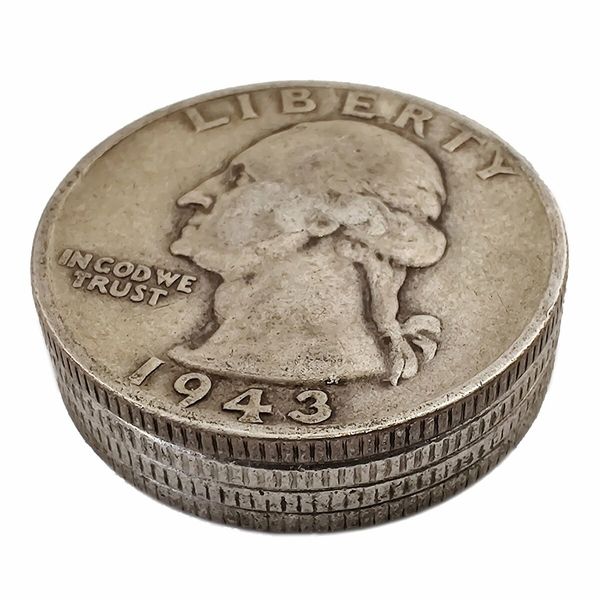
The Simple Rule: 1964 and Earlier = Silver
Washington quarters were first minted in 1932, and every one struck through 1964 was made from the same 90% silver, 10% copper alloy that the U.S. Mint had used for quarters since 1873. Starting in 1965, Congress passed the Coinage Act of 1965, authorizing the switch to copper-nickel clad coins. Silver had become too valuable to keep in everyday pocket change.
The cutoff is clean: 1964 and earlier = silver. 1965 and later = no silver. You don’t need to memorize anything else to sort silver quarters from clad ones — just check the date.
Full List: Every Year Washington Silver Quarters Were Made
Washington silver quarters were produced at three mints: Philadelphia (P, or no mint mark), Denver (D), and San Francisco (S). The mint mark appears on the reverse, at the bottom of the coin just above the “R” in QUARTER.
⭐ = Key Date for collectors
| Year | Philadelphia | Denver (D) | San Francisco (S) | Notes |
|---|---|---|---|---|
| 1932 ⭐ | ✓ | ✓ (436,800) | ✓ (408,000) | First year. 1932-D and 1932-S are the rarest — see key dates note below |
| 1933 | Not produced (Great Depression production halt) | |||
| 1934 | ✓ | ✓ | — | |
| 1935 | ✓ | ✓ | ✓ | |
| 1936 ⭐ | ✓ | ✓ (5.37M) | ✓ | 1936-D: lower mintage, collector interest |
| 1937 | ✓ | ✓ | ✓ | |
| 1938 | ✓ | — | ✓ | |
| 1939 | ✓ | ✓ | ✓ | |
| 1940 | ✓ | ✓ | ✓ | |
| 1941 | ✓ | ✓ | ✓ | |
| 1942 | ✓ | ✓ | ✓ | |
| 1943 | ✓ | ✓ | ✓ | |
| 1944 | ✓ | ✓ | ✓ | |
| 1945 | ✓ | ✓ | ✓ | |
| 1946 | ✓ | ✓ | ✓ | |
| 1947 | ✓ | ✓ | ✓ | |
| 1948 | ✓ | ✓ | ✓ | |
| 1949 | ✓ | ✓ | ✓ | |
| 1950 | ✓ | ✓ | ✓ | |
| 1951 | ✓ | ✓ | ✓ | |
| 1952 | ✓ | ✓ | ✓ | |
| 1953 | ✓ | ✓ | ✓ | |
| 1954 | ✓ | ✓ | ✓ | |
| 1955 | ✓ | — | — | |
| 1956 | ✓ | ✓ | — | |
| 1957 | ✓ | ✓ | — | |
| 1958 | ✓ | ✓ | — | |
| 1959 | ✓ | ✓ | — | |
| 1960 | ✓ | ✓ | — | |
| 1961 | ✓ | ✓ | — | |
| 1962 | ✓ | ✓ | — | |
| 1963 | ✓ | ✓ | — | |
| 1964 | ✓ | ✓ | — | Last year of 90% silver Washington quarters |
Over 3.4 billion Washington silver quarters were struck between 1932 and 1964. Many have been melted down for their silver content over the decades, but a significant number remain in collections, rolls, and even ordinary pocket change.Source: U.S. Mint Annual Reports; PCGS CoinFacts mintage data
How to Tell if a Quarter is Silver
Method 1: Check the Date (Easiest)
Turn the quarter over and read the date. If it says 1964 or earlier, it’s silver. That’s all you need to know for Washington quarters.
Method 2: Look at the Edge
Hold the quarter on its edge. A silver quarter has a solid silver-white edge with no visible layers. A modern clad quarter shows a copper-colored stripe running through the middle of the edge — that’s the copper core showing through the nickel-copper outer layers. This test works on any quarter regardless of date wear or legibility.
✅ Silver quarter edge
- Uniform silver-white all the way through
- No stripe or layering visible
- Date: 1964 or earlier
❌ Clad quarter edge
- Visible copper stripe through the middle
- Looks “sandwiched”
- Date: 1965 or later
Common confusion: The 1976 Bicentennial Quarter
The 1776–1976 Bicentennial quarter (with the Colonial drummer on the reverse) is not silver in standard circulation. It’s the same copper-nickel clad as all post-1964 quarters. A special 40% silver Bicentennial quarter was produced for collector sets in 1975–1976, but those were sold directly to collectors and are not the coins you’ll find in change. If yours came from a collection set in a mint box, it may be 40% silver — otherwise assume clad.
What Are Silver Washington Quarters Worth?
Melt Value Calculation
A Washington silver quarter has a gross weight of 6.25 grams. At 90% silver, that’s 5.625 grams of pure silver per coin. In troy ounces (the unit used for precious metals), that works out to approximately 0.18084 troy oz per coin for an uncirculated example.
For circulated coins, dealers use the slightly lower standard of 0.715 troy oz per $1.00 face value (four quarters), which accounts for average wear. That works out to about 0.17875 troy oz per individual quarter — the figure used in the live calculation at the top of this page.
$1.00 face value (4 quarters) = 0.715 troy oz silver
1 quarter = 0.17875 troy oz silver
Today’s melt value = $10.51 per coin
This melt value is the absolute floor on what a silver Washington quarter is worth. No matter what condition it’s in, a silver quarter can always be melted for its silver content.
⭐ Key dates — check before you sell: Most Washington silver quarters are worth only melt value. But a handful of dates and mint mark combinations are genuinely scarce and worth far more. Before selling a roll of silver quarters at melt, check these: ⭐ 1932-D (mintage 436,800), ⭐ 1932-S (mintage 408,000), and ⭐ 1936-D. In any grade, these three can be worth $100–$4,000+ depending on condition. Run any low-mintage coin through PCGS CoinFacts or NGC’s price guide before lumping it in with junk silver.Source: PCGS CoinFacts population and price data
What Is “Junk Silver” and Why Do Buyers Like It?
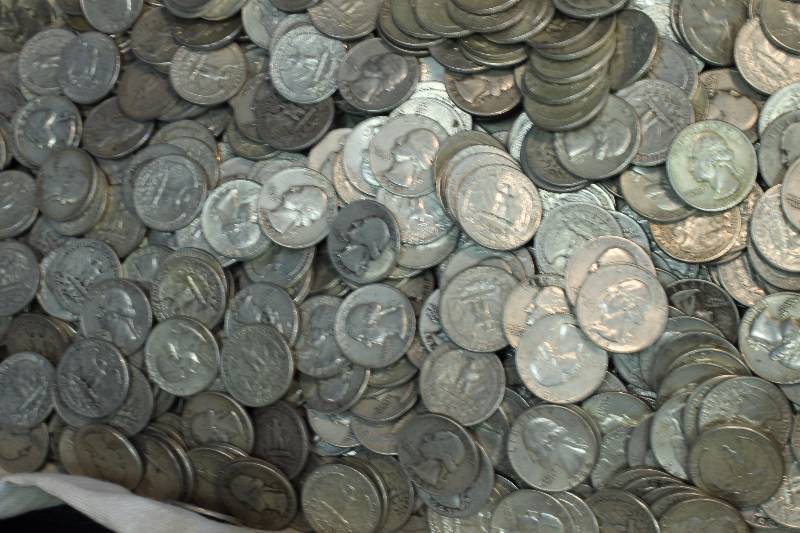
“Junk silver” is a term borrowed from the coin-collecting hobby. To a numismatist, a “junk” coin is one worn enough that it has no collectible premium — its value is purely in the metal. For silver investors, that’s actually a feature, not a flaw.
Junk silver quarters are popular among first-time silver buyers for a few reasons:
- Fractional sizing. At roughly $5–$7 per coin at current silver prices, they’re one of the most accessible ways to start building a silver position. You don’t need to commit to a full 1 oz bar.
- Low premiums. Junk silver often trades at or near spot — sometimes below spot during periods of low demand. This makes it one of the most cost-efficient ways to buy silver by the ounce.
- Recognized everywhere. Washington quarters are U.S. legal tender with instantly recognizable silver content. They’re easy to sell, trade, or barter without needing assay or verification.
- Built-in history. Every pre-1965 quarter in circulation has been changing hands for 60+ years. There’s something tangible about that for buyers who are skeptical of newer bullion products.
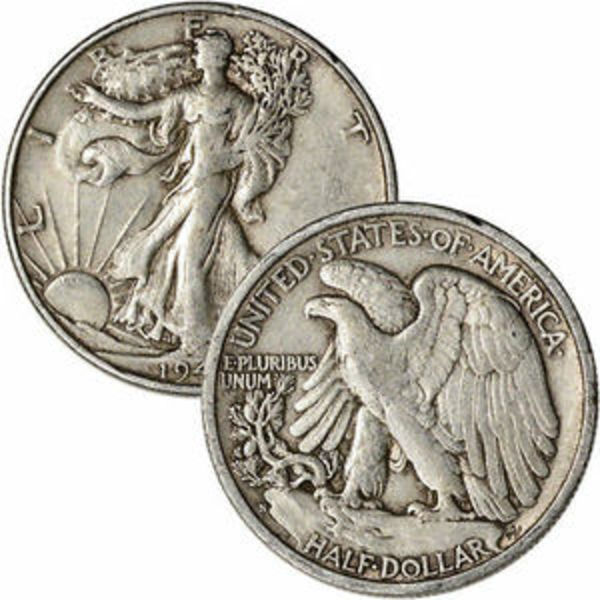
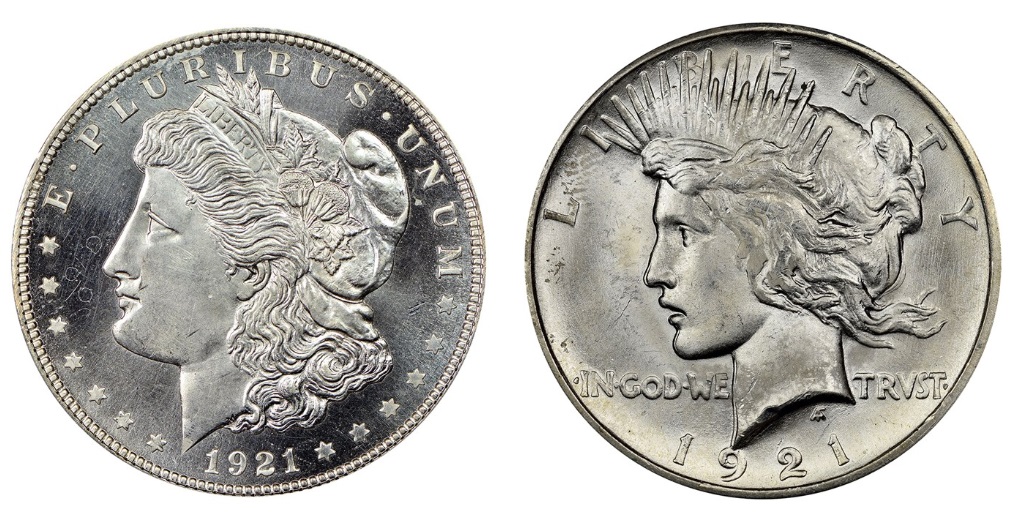
Washington quarters are the most common junk silver coin, but they’re far from the only one. Standing Liberty quarters (1916–1930), Barber quarters (1892–1916), and 90% silver dimes, half dollars, and dollars all carry the same 90% silver content and are valued the same way by weight.
Compare prices on 90% silver quarters right now:
- $1 Face Value — Washington Silver Quarters
- $10 Face Value — Standing Liberty Quarters
- $10 Face Value — 90% Silver Quarters
- $10 Face Value — Modern 90% Proof Quarters
- $100 Face Value — 90% Silver Quarter Bags
Or use the Washington quarter melt value calculator to see exactly what any quantity of silver quarters is worth at today’s spot price.
More Quarter Collecting Guides
- 2022 American Women Quarter Error Coin Values
- 2023 Quarter Die Crack Values, Off Center Strikes, and other Quarters Worth Money
- Valuable 1776-1976 Bicentennial Quarters: Errors, Values, Silver Varieties & Auction Records
- America the Beautiful 5 oz Silver Coins and 90% Silver Proof Quarters
- Which Quartes are Worth Money?
- 2019 Silver Proof Quarters: The First .999 Fine Silver Set
Sources: Federal Reserve St Louis: Coinage Act of 1965 · PCGS CoinFacts: Washington Quarter mintage data and population reports · NGC Coin Explorer: Washington Quarter price guide · U.S. Mint Annual Reports (1932–1964)