Every form of physical silver — bars, rounds, government coins — is straightforward: you’re buying metal by weight at some premium over spot. But 90% silver coins are different. They’re the only silver product that was once legal tender, that carries a U.S. government-guaranteed face value, and that can be worth significantly more than its metal content to the right buyer. Every $1.00 of face value in pre-1965 U.S. silver coins contains 0.7234 troy ounces of pure silver — a melt value of 41.78. But melt value is just the floor.
Current melt value: 41.78 per $1.00 face value — based on 0.7234 troy oz of pure silver per dollar of face value at today’s spot price. Use our silver coin value calculator to check any denomination.
What Are 90% Silver Coins?
From 1792 until 1964, the United States Mint struck dimes, quarters, half dollars, and dollar coins from an alloy of 90% silver and 10% copper. This was standard American coinage — not a special edition or commemorative program.
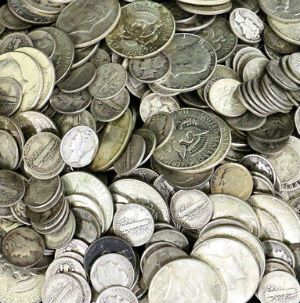
The Coinage Act of 1965 ended that era. Rising silver prices had made the metal in the coins worth more than their face value, so Congress authorized the switch to copper-nickel clad coinage. Americans began pulling silver coins from circulation almost immediately. Six decades later, the survivors are what the bullion market calls “junk silver” — a term describing their numismatic condition (too worn for most coin collectors), not their value.
The coins span several well-known series:
| Denomination | Series | Years | Silver Content (per coin) |
|---|---|---|---|
| Dime | Roosevelt, Mercury, Barber | 1892–1964 | 0.0723 troy oz |
| Quarter | Washington, Standing Liberty, Barber | 1892–1964 | 0.1808 troy oz |
| Half Dollar | Kennedy (1964 only), Franklin, Walking Liberty, Barber | 1892–1964 | 0.3617 troy oz |
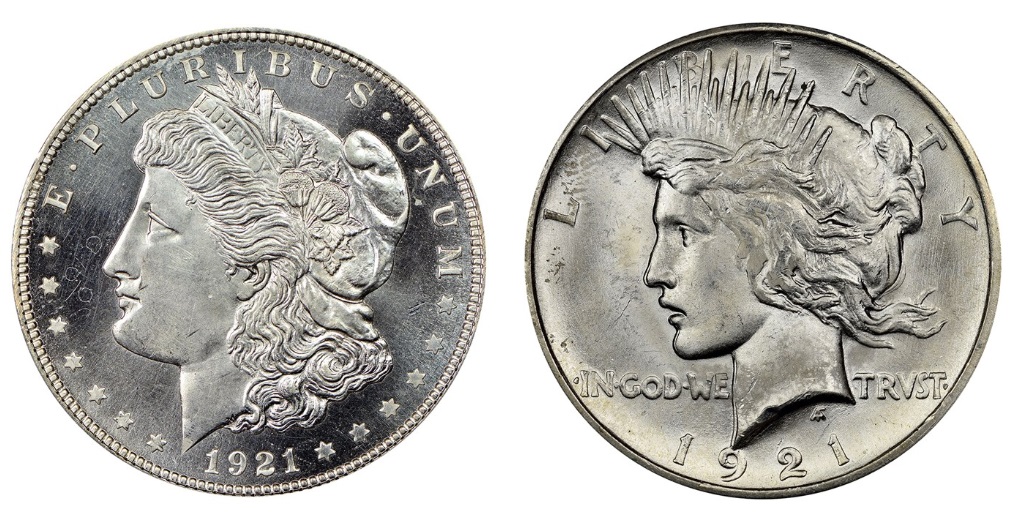
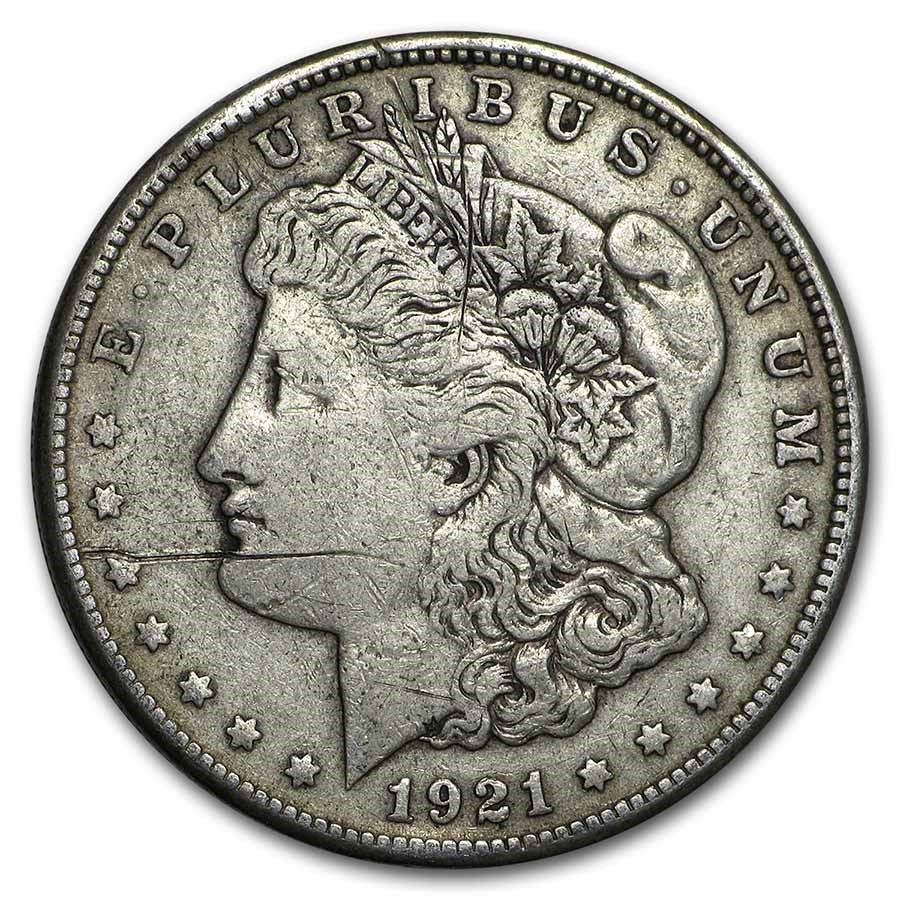
| Dollar | Morgan, Peace | 1878–1935 | 0.7734 troy oz |
Kennedy half dollars from 1965–1970 contain 40% silver, not 90%. Dollar coins (Morgans and Peace Dollars) are typically traded separately because their higher silver content and collector demand give them independent pricing dynamics. When dealers say “junk silver” without qualification, they mean dimes, quarters, and half dollars dated 1964 and earlier.
The Math
Every $1.00 of face value contains 0.7234 troy ounces of pure silver. That ratio is fixed regardless of condition or denomination mix. A $10 face value bag contains approximately 7.234 troy ounces; a standard $1,000 face value bag holds roughly 723.4 troy ounces.
A single pre-1964 Washington quarter (face value $0.25) contains 0.1808 troy ounces — a melt value of 10.44. A Roosevelt dime ($0.10 face) holds 4.18 in silver.
What makes 90% silver structurally different from bars or rounds is the premium behavior. In normal conditions, junk silver trades at 5–15% above melt. In periods of high demand or physical scarcity, premiums can spike above 30%, as happened during the 2020 supply squeeze. And when refinery economics favor processing these coins — as occurred in early 2026 — junk silver can trade at or below melt value, letting buyers acquire silver at a discount to spot.
No other silver product has this premium volatility. Bars and rounds maintain stable premiums. Government coins like Eagles carry high but predictable premiums. Junk silver is the only category where the premium itself becomes a variable — creating a second axis of return beyond the underlying price movement.
See current premiums across dealers on our junk silver price comparison page.
Why 90% Silver Coins Stand Apart
Government-guaranteed content. Every coin was struck to precise federal specifications. A 1944 Mercury dime and a 1964 Roosevelt dime contain identical silver — 2.25 grams each. There’s no question of purity, no need for assay, and no counterfeiting concern in the way that exists with generic bars. The coin is the assay. This makes selling frictionless: every dealer, pawn shop, and metals buyer in the country recognizes them instantly.
Built-in divisibility. You can’t spend part of a 10 oz bar. But 90% silver comes pre-divided into dimes (0.0723 oz), quarters (0.1808 oz), and half dollars (0.3617 oz). If you ever need to convert small amounts of silver to cash, junk silver doesn’t require cutting or trusting a counterparty’s scale. This divisibility comes at no cost premium over other junk silver formats.
Reporting thresholds. Under current IRS rules, dealers must file a 1099-B when a customer sells certain precious metals in qualifying quantities. For 90% silver coins, the reporting threshold is $1,000 in face value — roughly 723 troy ounces. Most individual investors transacting in smaller quantities won’t trigger mandatory reporting. By contrast, 100 oz silver bars trigger reporting at a single unit. This isn’t about tax avoidance (capital gains are taxable regardless), but it is a structural difference many buyers consider.
Premium compression windows. Historically, junk silver carries premiums of 5–15% above melt. Periodically, market conditions compress those premiums to near or below spot — driven by refinery economics or secondary market supply shifts. During these windows, you’re buying silver at a lower effective cost per ounce than bars, rounds, or government coins. Investors who track premium cycles use junk silver to acquire metal at the best possible price.
Collector crossover. Every coin in a junk silver bag has a date and mint mark. A 1916-D Mercury dime (mintage: 264,000) could sit in a $10 face value lot priced at melt. A 1932-D Washington quarter has been found by sharp-eyed buyers sorting bulk bags. Even without rarities, Walking Liberty halves and Mercury dimes are considered among the most beautiful coins the Mint ever produced — many buyers prefer holding historical coinage over anonymous stamped bars.
Finite, shrinking supply. No more 90% silver coins will ever be minted. Supply has declined steadily since 1964 through melting, loss, and migration of better-condition examples into numismatic collections. Bars and rounds can be produced in unlimited quantities as long as raw silver exists. When demand for junk silver increases, supply remains fixed — and premiums rise. Over long time horizons, this is a structural tailwind.
Understanding the Denominations
Each denomination has practical differences worth knowing.
Dimes (Roosevelt and Mercury) — Most divisible. A $100 face value bag is 1,000 silver dimes weighing about 5.5 pounds. Popular for maximum flexibility in small transactions. Trade-off: most space per ounce and tedious to count in quantity.
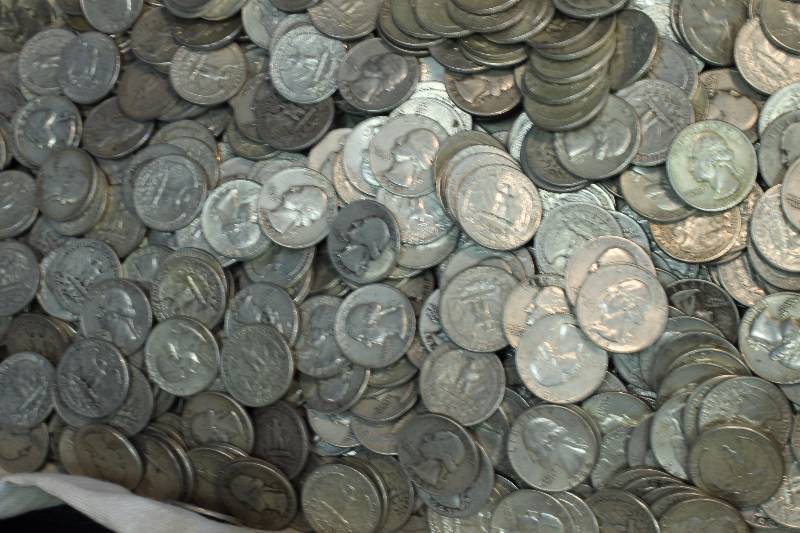
Quarters (Washington, Standing Liberty, Barber) — The middle ground at 0.1808 oz per coin. Washington silver quarters (1932–1964) are most common and typically cheapest. Standing Liberty and Barber quarters occasionally carry slight premiums due to age, though in heavily worn condition the difference is usually minimal.
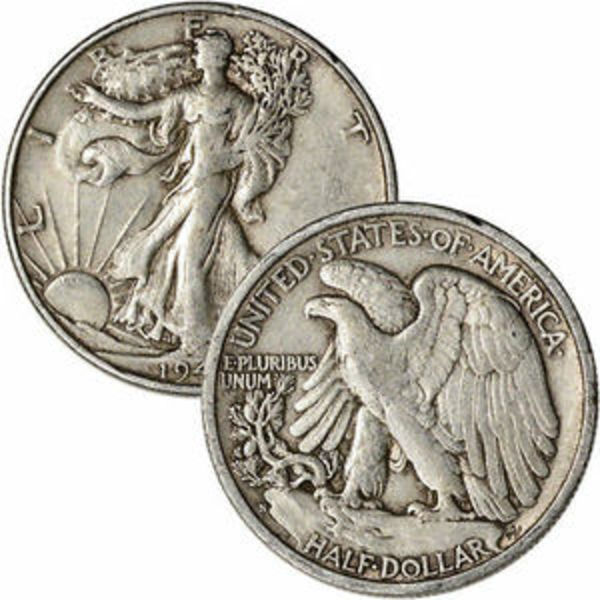
Half Dollars (Kennedy, Franklin, Walking Liberty) — Most silver per coin at 0.3617 oz. Walking Liberty halves are most sought-after for their design and sometimes command a premium in nicer condition. Franklins are typically cheapest per ounce. The 1964 Kennedy — the only year in 90% silver — is common but carries sentimental appeal.
Note: Kennedy halves from 1965–1970 are 40% silver (0.1479 oz per coin vs. 0.3617 oz for 90%). They trade separately at lower premiums.
How to Buy
Junk silver is sold by face value — you’ll see prices quoted per $1.00 FV, or for standard bag sizes ($10, $100, $1,000 FV). Price per dollar of face value moves with spot, plus or minus the current premium.
Compare across dealers. Premiums on junk silver vary more between dealers than standard bullion products. Our 90% silver price comparison tracks live pricing so you can find the tightest spread.
Larger lots cost less per ounce. A $100 FV bag will almost always have a lower premium than ten separate $10 FV purchases.
Condition rarely matters — except when it does. For pure bullion buyers, a worn dime and a lightly circulated dime contain the same silver. But buying unsorted “average circulated” lots gives you the best chance of finding occasional semi-key dates.
Know the melt value before you buy. Our silver coin melt value calculator shows the exact current melt value for any denomination. That’s the baseline for evaluating any asking price.
Check the closest-to-spot deals. Our closest-to-spot tool shows which silver products currently sell at the tightest premiums. Junk silver frequently appears near the top.
Where 90% Silver Fits in a Stack
Physical silver investors typically hold a mix: bars (lowest premiums, most efficient for accumulating weight), government coins (maximum liquidity and global recognition), and 90% silver (divisibility, premium optionality, historical character). The right balance depends on whether you prioritize cost-per-ounce, flexibility, or the possibility that a bag of $14 dimes contains a $200 numismatic surprise.
Further Reading
- How Payment Methods Affect Silver Premiums
- Silver Bars vs Silver Coins
- Morgan Silver Dollar Value Guide
Frequently Asked Questions
What does “90% silver” mean? The alloy composition: 90% pure silver and 10% copper. This was the standard for U.S. dimes, quarters, half dollars, and dollar coins from 1792 through 1964. The copper provides hardness — pure silver is too soft for circulating coinage.
What is “junk silver”? A market term for pre-1965 U.S. silver coins in circulated condition valued for silver content rather than collector premium. “Junk” describes condition, not value. A heavily worn Roosevelt dime is still worth 4.18 in silver.
What is “constitutional silver”? Same coins, different name. The term emphasizes that these coins were authorized under the Constitution’s grant of coinage power to Congress, distinguishing them from privately minted bullion.
How much silver is in a $10 face value bag? Approximately 7.234 troy ounces of pure silver — a melt value of roughly 417.76. The actual coin mix (dimes, quarters, halves) doesn’t matter because the silver-to-face-value ratio is consistent across all 90% denominations.
Are 90% silver coins a good investment? They offer government-guaranteed content, divisibility, no counterfeiting concern, favorable reporting thresholds, and a finite shrinking supply. The trade-off is storage density — coins take more space than equivalent weight in bars. For investors who value flexibility and historical character alongside metal content, they’re among the most practical silver products available.
Where can I find the best prices? Our 90% silver price comparison tracks live pricing across major dealers. The closest-to-spot tool shows which silver coins currently have the tightest premiums over melt.