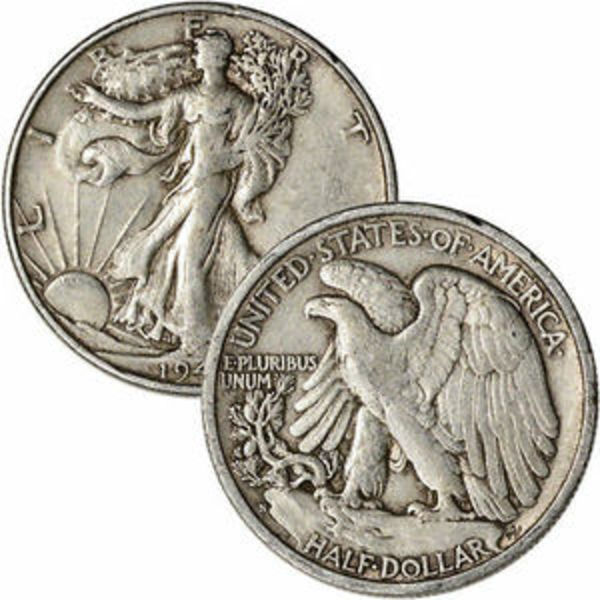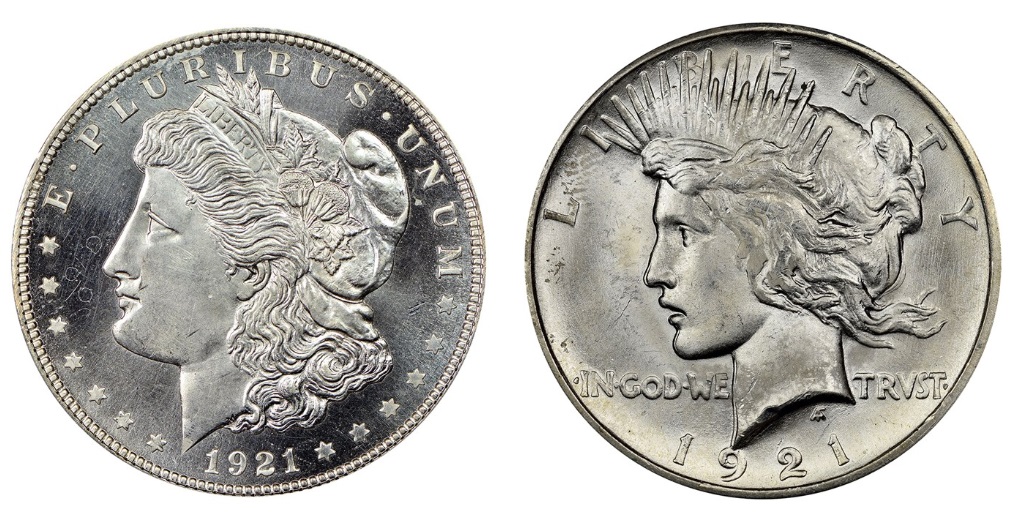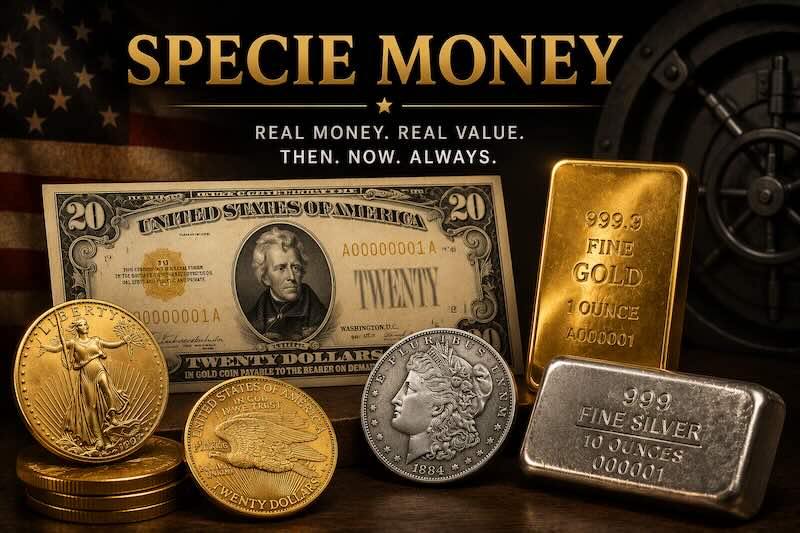
Specie is metal coin — specifically gold and silver coin — used as money. The word comes from the Latin in specie, meaning “in the actual form.” When a government promises to redeem paper money in specie, it means you can walk into a bank and exchange your notes for physical gold or silver at a fixed rate.
For most of American history, that promise held. Paper dollars were warehouse receipts for metal sitting in Treasury vaults. The system broke in stages — suspended during the Civil War, restored in 1879, restricted in 1933, and killed outright in 1971. Understanding that arc explains why millions of people still buy gold and silver today. They’re not speculating. They’re doing what governments used to do: holding real money.
How Specie Became American Money
The founders were not theorizing about hard money. They had lived through the Continental dollar — paper currency issued during the Revolution that inflated into worthlessness by 1781. The phrase “not worth a Continental” entered the language because people had direct experience watching paper money collapse.
The Constitution addressed this directly. Article I, Section 10 prohibits states from making “any Thing but gold and silver Coin a Tender in Payment of Debts.” The Coinage Act of 1792 turned that clause into a monetary system. It established the US Mint, defined the dollar as 371.25 grains of pure silver (about 0.77 troy ounces), and set the gold-to-silver ratio at 15:1. A $10 gold Eagle contained 247.5 grains of pure gold.
Those weights were not arbitrary. They were calibrated to the Spanish milled dollar — the coin that actually circulated in the colonies. The new American dollar was designed to be interchangeable with money people already used.
The Coinage Act also carried enforcement provisions that would surprise modern readers. Any Mint officer who debased the coinage faced the death penalty.
Specie Under Pressure
The specie system worked until the money ran out — which happened every time the government needed to spend more than it had in metal.
Jackson’s Specie Circular (1836): Andrew Jackson — the man on the $20 bill — issued an executive order requiring that public land purchases be paid in gold or silver, not paper bank notes. The move drained specie from banks and contributed to the Panic of 1837. Forcing a return to hard money after a credit expansion is painful — a pattern that would repeat.
The Civil War (1861–1879): The Union suspended specie payments in December 1861 to finance the war. The Treasury issued “greenbacks” — paper dollars backed by nothing but government promise. Prices roughly doubled. After the war, the Specie Payment Resumption Act of 1875 committed the government to restoring gold convertibility by January 1, 1879. It worked. The US returned to the gold standard and stayed there for 54 years.
The “Crime of ’73” (1873): The Coinage Act of 1873 ended the right to have silver bullion coined into dollars, putting the US on a gold-only standard. Silver miners and populists called it the “Crime of ’73.” The debate between gold and silver money dominated American politics for 27 years, until the Gold Standard Act of 1900 settled it in gold’s favor.
The End of Specie
The specie era ended in two moves thirty-eight years apart.
1933 — Roosevelt’s gold seizure. Executive Order 6102 required Americans to surrender their gold coins, gold bullion, and Gold Certificates to the Federal Reserve. The exchange rate was $20.67 per troy ounce. After collection, Roosevelt revalued gold to $35 per ounce — a 69% devaluation of the dollar against gold. Americans could no longer hold monetary gold or redeem paper for specie. The coins seized became bars sitting in Fort Knox, which began receiving gold shipments in January 1937.
1971 — Nixon closes the gold window. On August 15, 1971, President Nixon suspended dollar convertibility for foreign governments — the last entities that could still exchange dollars for gold at $35 per ounce. The Bretton Woods system, which had pegged global currencies to a gold-backed dollar since 1944, collapsed. Every major currency became fiat: backed by government decree, not metal.
The price of gold, fixed at $35 for 38 years, was free to float. It hit $850 by January 1980.
Why Specie Still Matters to Bullion Investors
No government operates a specie standard today. But the logic behind specie — money should be something a government can’t create by decree — is the reason the physical precious metals market exists.
Every gold bar and silver round sold through bullion dealers is a private bet on the same principle that animated the Coinage Act of 1792: metal holds value because it’s scarce, divisible, durable, and impossible to print. The US dollar has lost over 97% of its purchasing power since the Federal Reserve was created in 1913. Gold priced in dollars has gone from $20.67 to over $4,500.
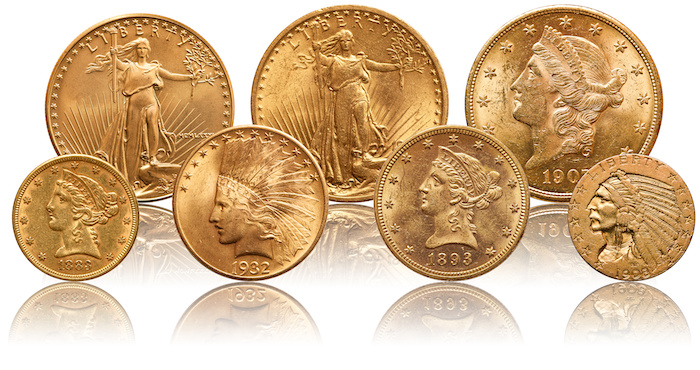
When investors buy Pre-1933 gold coins — $10 Eagles, $20 Double Eagles, $5 Half Eagles — they’re buying coins that once circulated as specie. A $20 Saint-Gaudens Double Eagle contained 0.9675 troy ounces of gold, worth $20 in 1907 and over $4,350 in metal value today. The gold didn’t change. The dollar did.
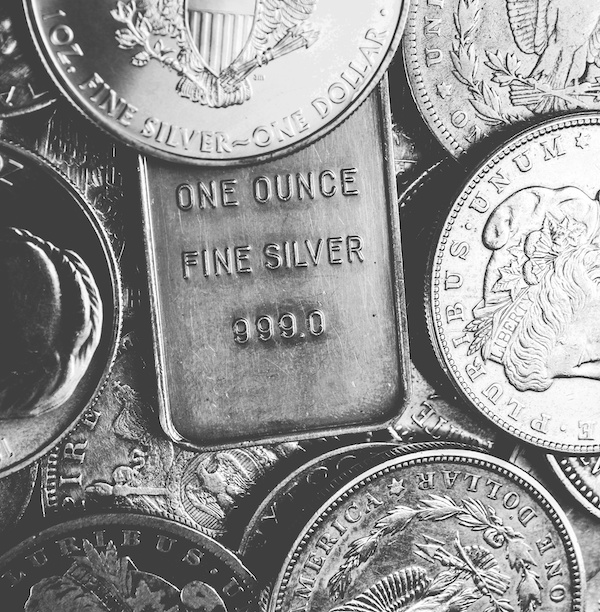
Modern bullion — gold bars, silver bars, American Eagles, Canadian Maples — is the contemporary version of specie. It doesn’t circulate as currency. It doesn’t need to. The function is the same it always was.
Track live gold and silver spot prices →
Related
- Pre-1933 Gold Coins Guide — The coins that circulated as specie
- Executive Order 6102 — The 1933 gold seizure
- Gold Certificate Values — Paper that was redeemable in specie
- Gold-to-Silver Ratio — The ratio that defined bimetallism
- Gold Spot Price — Live pricing
Disclaimer: This article is for informational and educational purposes only. It is not financial or investment advice. FindBullionPrices.com is a price comparison platform and does not sell bullion or currency notes.